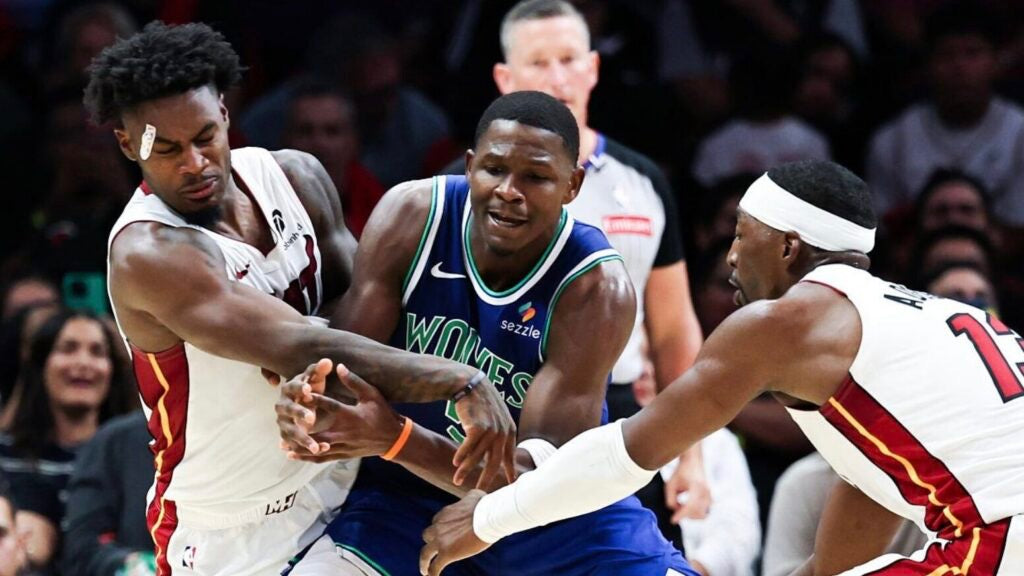
The Miami Heat entered the 2026-27 season with championship aspirations after an impressive preseason that saw their revamped roster look like a legitimate contender. With Giannis Antetokounmpo playing at an MVP level, Klay Thompson providing perimeter shooting, and Bam Adebayo anchoring what was expected to be one of the NBA's best defenses, Miami appeared ready to make a statement in its home opener. Instead, the Heat received a harsh reality check, suffering an embarrassing 131-106 defeat to the Minnesota Timberwolves in front of their home crowd.
Miami struggled defensively, couldn't buy a three-pointer, was dominated on the offensive glass, and looked completely dependent on its newest superstar to generate offense. Giannis was spectacular in his regular-season debut, finishing with 35 points and six rebounds, but his individual brilliance wasn't nearly enough against a Minnesota team led by Anthony Edwards, who erupted for 45 points. After looking nearly unstoppable during the preseason, the Heat suddenly looked like a team with considerable work ahead.
Following the loss, Erik Spoelstra acknowledged that his team had been humbled.
"We'll figure it out. None of us like to be humbled like that — we have a lot of competitors in the locker room so we'll get to it…you have to commit to doing ridiculous hard things to be able to defend in this modern NBA…it’s not good enough if you want to win…it never stops if you want to win."
Here are the major takeaways from Miami's disappointing season opener.
1. Giannis Looks Like an MVP Candidate, but Miami Cannot Depend on Him for Everything
If there was one encouraging development from Miami's opening-night disaster, it was the performance of Giannis Antetokounmpo. The two-time MVP looked every bit like the dominant player Miami envisioned when it acquired him, scoring the Heat's first eight points and controlling the opening half. Giannis finished the first two quarters with 21 points on an incredibly efficient 8-of-10 shooting, repeatedly attacking Minnesota's defense before it could get organized. His ability to finish through contact, push the tempo, and create opportunities around the basket was everything Miami hoped it would be.
Even against Rudy Gobert, one of the league's premier interior defenders, Giannis consistently found ways to score. He finished with 35 points and six rebounds, providing the only reliable offensive production Miami could count on throughout the evening. However, his dominance also highlighted just how dependent the Heat were on their newest superstar. When Giannis wasn't attacking the basket or creating opportunities in transition, Miami struggled to generate offense, allowing Minnesota to build its lead whenever the Heat's attack slowed down.
For a team with championship aspirations, that level of dependence on one player is unsustainable. Miami didn't assemble this roster to become a one-man show, and the Heat will need considerably more from Adebayo, Thompson, Mitchell, and the rest of their supporting cast. Giannis can certainly carry Miami on individual nights, but the Heat need to develop a balanced offensive attack capable of producing when their superstar isn't dominating. Despite being Miami's only real bright spot, Giannis refused to excuse himself from the team's disappointing performance.
"Our effort gotta be way better…my effort gotta be better…our effort was not good as it was in the past…I have to be better — it starts with me, I have to set the tone."
Giannis' performance suggests that an MVP-caliber season is entirely possible, but his postgame comments also demonstrated the leadership Miami needs from its franchise superstar. The Heat have the luxury of building around one of the most dominant players in basketball, something very few teams can say. However, having an MVP candidate and being a championship contender are two different things. Miami has the former, but opening night demonstrated that becoming the latter will require significant improvement.
2. Miami's Perimeter Defense Was Exposed by Anthony Edwards and LaMelo Ball
Perhaps the most concerning development from opening night was how easily Minnesota dismantled Miami's defense. The Timberwolves' revamped backcourt of Anthony Edwards and LaMelo Ball created problems from the opening quarter, consistently finding favorable matchups and generating clean looks from beyond the arc. Edwards was sensational, finishing with 45 points on 29 shots while repeatedly punishing Miami's defenders. Ball added 21 points and provided another dangerous perimeter threat, forcing the Heat to defend multiple explosive offensive creators simultaneously.
Miami was particularly vulnerable defending pick-and-roll situations, frequently arriving late on defensive rotations and allowing Edwards and Ball to step into comfortable three-point attempts. Klay Thompson was repeatedly targeted by Minnesota's primary playmakers, and at this stage of his career, Thompson simply doesn't possess the lateral quickness to consistently stay in front of explosive perimeter players like Edwards. He struggled navigating screens, recovering defensively, and keeping Minnesota's guards from gaining advantages in transition. This presents an interesting dilemma for Spoelstra, who wants to use Giannis as a roaming help defender but may need to reconsider some of his defensive assignments against teams with elite perimeter talent.
To Minnesota's credit, Edwards also made several incredibly difficult shots that even excellent defense wouldn't have prevented. When a player is knocking down contested jumpers over Adebayo and finding openings between multiple defenders, sometimes there simply isn't much a defense can do. However, there is a significant difference between surrendering difficult, contested shots and allowing opponents to repeatedly generate comfortable looks because of poor defensive execution. Miami did far too much of the latter, and the Heat's inability to contain Minnesota's perimeter attack was one of the biggest reasons the game got out of hand.
Spoelstra made it clear afterward that improvements are necessary, stating, "We're going to have to step up our defense. We know that." The Heat allowed an offensive rating of approximately 126, a disappointing performance for a team expected to rank among the NBA's best defensively. Miami has the personnel to be considerably better, particularly with Giannis and Bam providing an elite defensive combination in the frontcourt. However, the Heat must find ways to protect their slower perimeter defenders without constantly compromising their defensive structure.
3. Miami's Three-Point Shooting Was a Disaster
One of Miami's biggest advantages entering the season was supposed to be the spacing surrounding Giannis Antetokounmpo. With Thompson, Andrew Wiggins, Nikola Jovic, and other perimeter options, the Heat appeared capable of punishing defenses that collapsed into the paint to stop their superstar. That certainly wasn't the case against Minnesota, as Miami finished an abysmal 8-of-33 from three-point range, shooting just 24.2 percent from beyond the arc. Even more alarming was the enormous disparity in three-point production, with Minnesota outscoring Miami 63-24 from beyond the arc, a staggering 39-point difference in a game decided by 25 points.
Thompson provided an early spark with two first-quarter three-pointers, but Miami's perimeter attack never developed any consistency. The Heat certainly missed some quality opportunities, but the problems went beyond simply failing to make open shots. Miami's offense frequently struggled to generate the type of ball movement and penetration necessary to create high-percentage perimeter looks, with too many possessions becoming stagnant. Instead of forcing Minnesota's defense into difficult rotations, the Heat often settled for contested attempts or failed to capitalize when opportunities presented themselves.
Spoelstra was particularly frustrated with his team's offensive execution, stating, "We didn't look like us offensively," before criticizing his players for "Walking the ball up, waiting for play calls, playing on one side of the floor." Those comments are especially concerning considering how effective Miami looked pushing the pace during the preseason. The Heat want to attack defenses before they get organized, create open shots through constant movement, and use their athleticism to generate easy scoring opportunities. Against Minnesota, that identity disappeared for extended stretches, leaving Miami with an offense that looked far less dangerous than the one that dominated preseason competition.
Miami doesn't necessarily need to become one of the league's best three-point shooting teams, but it cannot consistently lose the perimeter battle by margins approaching 40 points. The presence of Giannis should eventually create plenty of opportunities for Miami's shooters as opposing defenses concentrate on preventing him from getting to the basket. However, those opportunities mean little if the Heat cannot convert them at a respectable rate. The shooting percentages will likely improve, but the quality of Miami's offensive execution must improve along with them.
4. The Heat Still Lack a Reliable Secondary Shot Creator
One of the biggest questions surrounding Miami's offseason roster construction was whether the Heat had enough offensive creation outside of Giannis Antetokounmpo. Opening night did little to alleviate those concerns, particularly when Minnesota forced Miami into half-court possessions. Davion Mitchell provided the type of early tempo Miami wants from its starting point guard, aggressively pushing the ball and attempting to create opportunities before Minnesota could establish its defense. However, when the game slowed down, Mitchell struggled with his decision-making and appeared rushed on several possessions, contributing to an offense that frequently looked uncomfortable and disorganized.
Bam Adebayo showed flashes of the aggressive offensive mentality Miami needs during a third-quarter stretch, but those moments were too infrequent. Bam cannot afford to become a passive offensive player on a team that needs another dependable scoring option, particularly when opponents are focusing so much defensive attention on Giannis. Miami needs him attacking mismatches, looking for his own shot, and forcing opposing defenses to account for him as more than a facilitator. His offensive aggression will be essential if the Heat hope to prevent opposing teams from loading up against Antetokounmpo.
The problem is that Miami's roster doesn't feature another established player who can consistently create his own shot against a set defense. Thompson remains a dangerous perimeter shooter, but he isn't someone who will regularly break down defenders off the dribble, while Mitchell is better suited to pushing the tempo and facilitating than carrying a half-court offense. That places additional pressure on Adebayo to become a more consistent scoring threat and on Spoelstra to develop offensive actions that maximize the strengths of his supporting cast. It's only one game, and Miami's chemistry should improve as its new players become more comfortable together, but the lack of another dependable shot creator was a legitimate concern before the season and remains one afterward.
5. Miami's Rebounding and Physicality Were Unacceptable
For all the attention Miami's perimeter defense and shooting struggles will receive, one of the most disappointing aspects of the loss was the Heat's inability to control the offensive glass. Minnesota dominated offensive rebounding, holding a stunning 17-4 advantage and repeatedly generating second-chance opportunities. That is simply unacceptable for a team featuring Giannis Antetokounmpo and Bam Adebayo, particularly after Miami spent the offseason assembling a bigger and more athletic roster. The Heat entered the season expecting their increased size to become a significant advantage, but Minnesota was the more physical and disciplined team throughout the evening.
Adebayo acknowledged the problem afterward, stating, "We have a bigger team now so we're expected to rebound." He added, "We have to take care of the big muscle areas and I think we'll be ok." His comments reflected the frustration of a team that understands its physical advantages but failed to capitalize on them. Miami cannot expect to win consistently if opponents are generating that many additional possessions, particularly against teams with the offensive firepower Minnesota possesses.
The rebounding disparity also raises questions about Miami's commitment to the physical aspects of the game. Playing at a faster pace can create opportunities offensively, but it also requires discipline defensively, particularly when it comes to getting back in transition and finishing possessions with rebounds. The Heat were frequently caught out of position, and Minnesota capitalized on those mistakes. With the size and athleticism Miami possesses, there is no excuse for being dominated so thoroughly in an area that should be one of its strengths.
Interestingly, Miami's roster construction may have changed the types of opponents that present the biggest problems. Last season, bigger and more physical teams like Orlando and Detroit were difficult matchups for the Heat, but Giannis' arrival should make Miami considerably better equipped to compete against those opponents. Teams with explosive perimeter creators, however, could present a different challenge, particularly if they can match Miami's preferred tempo while exploiting its defensive weaknesses. Minnesota provided an early example of that possibility, and it will be interesting to see how Spoelstra adjusts against similar opponents moving forward.
6. Miami Needs More from Nikola Jovic and Pelle Larsson
Miami's championship aspirations depend on more than the performances of its established stars, and the Heat need meaningful contributions from their younger players. Unfortunately, opening night was disappointing in that regard, particularly for Nikola Jovic and Pelle Larsson. Jovic continues to be a frustrating player to evaluate because his size, shooting potential, and offensive versatility theoretically make him an excellent fit alongside Giannis and Bam. However, those advantages mean little if they aren't translating into consistent production, and against Minnesota, Jovic failed to provide the offensive spark Miami desperately needed.
At some point, Miami needs Jovic to become a reliable contributor rather than someone whose potential continues to exceed his actual impact. His offensive skill set should make him valuable in lineups featuring Giannis, but he must become more decisive and consistent when opportunities arise. With the Heat attempting to compete for a championship, the margin for extended stretches of ineffective basketball becomes considerably smaller. Spoelstra will need to determine how much responsibility Jovic can handle and whether his contributions justify the minutes he receives.
Larsson was another player who failed to make a significant overall impact, although there were encouraging defensive possessions in which he demonstrated his ability to stay in front of Minnesota's perimeter players. His defensive versatility could eventually earn him a larger role, particularly if Thompson continues struggling against quicker guards. However, Larsson must become more assertive offensively, as illustrated by a frustrating third-quarter possession in which he passed up an open three-pointer, attacked a closing defender, and turned the ball over. Miami cannot afford that type of hesitation from players expected to provide spacing around Giannis.
If Thompson continues to struggle defensively, Spoelstra may eventually consider inserting Larsson into the starting lineup, but that possibility depends on his offensive development. Larsson doesn't need to become a major scoring option, but he must demonstrate a willingness to take open shots and make decisive plays. The Heat already have enough players who need the ball in their hands to be effective, making reliable off-ball contributions particularly important. Both Jovic and Larsson have opportunities to establish themselves as important pieces of Miami's rotation, but their performances must become more consistent.
7. Minnesota Delivered a Statement Performance, but Miami Has Plenty of Time to Respond
While much of the conversation will understandably focus on Miami's shortcomings, Minnesota deserves significant credit for an outstanding performance. The Timberwolves looked like a team capable of competing with anyone in the NBA, led by an Anthony Edwards who was virtually unstoppable throughout the evening. Edwards finished with 45 points while displaying the complete offensive arsenal that has made him one of the league's premier young superstars. His ability to create shots off the dribble, knock down contested three-pointers, and attack Miami's defense in transition was remarkable.
LaMelo Ball also demonstrated why his addition could make Minnesota significantly more dangerous. By giving Edwards another legitimate offensive creator, the Timberwolves can generate high-quality opportunities without requiring their franchise player to initiate every possession. Edwards benefited from playing off the ball, finding openings in Miami's defense and attacking defenders who were already scrambling to recover. Jaden McDaniels provided another dimension offensively, while Rudy Gobert remained a formidable presence around the basket, giving Minnesota an impressive balance of perimeter scoring and interior defense.
Minnesota absorbed Miami's early energy, took control before halftime, and never allowed the Heat to seriously threaten in the second half. After leading 69-59 at halftime, the Timberwolves quickly pushed their advantage to 17 points early in the third quarter, with Ball and Edwards repeatedly connecting from beyond the arc. By the fourth quarter, the lead had surpassed 20 points, and Miami was unable to generate the defensive stops necessary to mount a comeback. It was an impressive opening-night statement from Minnesota and a reminder that the Western Conference features several teams with legitimate championship aspirations.
For Miami, the important thing is not allowing one disappointing performance to become a recurring problem. Adebayo understands that the team has considerable work ahead, stating, "Like I said it's game 1 but we don't want to make this a habit. For us tomorrow, you know how Spo is — we're about to watch 3 hours of film and it probably be all defense. We always say when we get stops and run — we're a hard team to beat." The Heat demonstrated throughout the preseason that they can play an exciting, fast-paced brand of basketball built around Giannis' unique abilities. Now they must prove they can execute that style against elite competition while maintaining the defensive discipline necessary to win consistently.