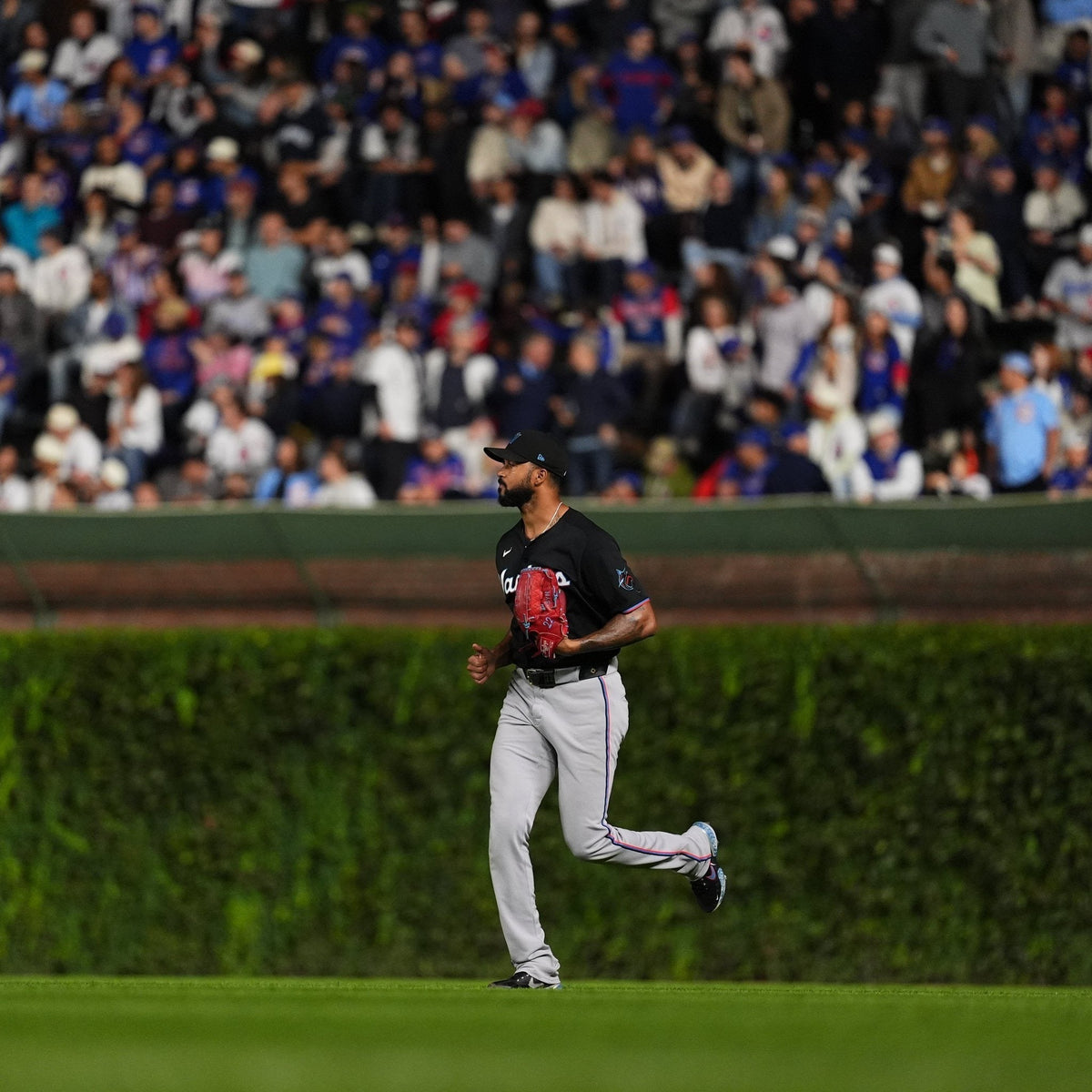
The Miami Marlins finished off a series win over the Chicago Cubs this week, but ultimately, it didn't matter.
The Marlins had already been officially eliminated from playoff contention on Friday, September 18, following an 8-2 loss to the San Diego Padres. What looked like it could become the breakthrough season of Miami's rebuild instead ended with the Marlins once again watching the postseason from home.
And that's what makes the end of the 2026 season so frustrating.
The Marlins entered the year hoping to take the next step from a rebuilding team to a legitimate playoff contender. For a while, it looked like they had done exactly that.
Miami put together one of the best stretches of baseball the franchise has seen in years, including a historic June that put the Marlins firmly in the National League playoff race. On July 9, Miami reached a season-high 10 games over .500 and appeared to have a legitimate opportunity to play meaningful baseball deep into September.
Instead, the season went in the opposite direction.
Still, calling 2026 a complete failure would ignore some of the progress Miami made. The Marlins showed that there is legitimate talent on this roster. The problem is that they also showed just how much work remains before this organization can become a consistent winner.
Here are my three biggest takeaways from the 2026 season.
1. THE MARLINS ARE CLOSER—BUT THEY ARE NOT THERE YET
For the first time during this rebuild, we got a glimpse of what this team could eventually become. At one point, the Marlins were 52-42 and three games ahead of the final National League Wild Card spot. They weren't chasing the playoff race—they were in it.
That matters.
There are legitimate pieces here that Miami can build around. Heriberto Hernandez emerged as an everyday player and legitimate power threat. Joe Mack, Griffin Conine, and Javier Sanoja continued to develop, while Sandy Alcantara looked much more like the pitcher Miami expects to anchor its rotation.
The Marlins have spent years talking about building a sustainable organization. In 2026, we finally saw stretches where that plan looked like it was beginning to translate into wins at the Major League level.
But there is a major difference between being capable of competing for a few months and being built to compete for 162 games.
The best teams can survive injuries, slumps and difficult stretches without their entire season falling apart. Miami couldn't.
That doesn't mean the rebuild isn't working. It means the rebuild isn't finished.
The Marlins should enter 2027 believing they can compete for a postseason spot, but the days of simply being encouraged by young players showing potential need to be over. The next step has to be turning that potential into a winning baseball team.
2. MIAMI STILL DOESN'T HAVE ENOUGH MARGIN FOR ERROR
The most revealing part of Miami's season wasn't how good the Marlins looked when everything was going right.
It was what happened when things started going wrong.
Injuries hit the rotation. Max Meyer, Robby Snelling and Thomas White all suffered season-ending injuries, while Anthony Bender and Pete Fairbanks missed significant time in the bullpen. Suddenly, a pitching staff that looked deep entering the season was being stretched thin.
The offense had the same problem. When some of Miami's most important hitters cooled off or were unavailable, there weren't enough other bats capable of carrying the lineup.That's the difference between having talent and having depth.Every Major League team deals with injuries. Every team goes through offensive slumps. Every bullpen blows games. Contenders are built to absorb those problems.
Miami wasn't.
Once several things went wrong at the same time, the Marlins didn't have enough answers. Their historic June was followed by a franchise-record 12-game losing streak, completely changing the direction of the season and eventually helping push the organization toward selling rather than adding at the trade deadline.
That should be one of Peter Bendix's biggest lessons from 2026.
The Marlins don't necessarily need a complete roster overhaul. They need to raise the floor of the roster.One more dependable starting pitcher matters. Another legitimate Major League bat matters. Two more reliable bullpen arms matter. A stronger bench matters.
Miami has begun assembling the core of a competitive team. Now it needs enough quality surrounding that core so that losing two or three important players doesn't derail an entire season.
3. 2027 HAS TO BE ABOUT WINNING, NOT REBUILDING
There comes a point in every rebuild when development can no longer be the primary measurement of success.
The Marlins are approaching that point.
Miami has now gone through two full seasons under Clayton McCullough without reaching the postseason. At the same time, the organization has shown enough progress that expectations should naturally change.
For years, Marlins fans have heard about prospects, payroll flexibility, future windows and building sustainably. Those things matter, but eventually a rebuild has to produce a team capable of winning.
This season showed that Miami may finally have enough of a foundation to justify becoming more aggressive.
That doesn't mean recklessly trading prospects or handing out bad contracts. It means recognizing where this team is in its development. If the Marlins believe this young core is legitimate, the front office has to supplement it.
The 2026 Marlins proved they could get into the playoff conversation.
The 2027 Marlins need to prove they can stay there.
FINAL GRADE: C