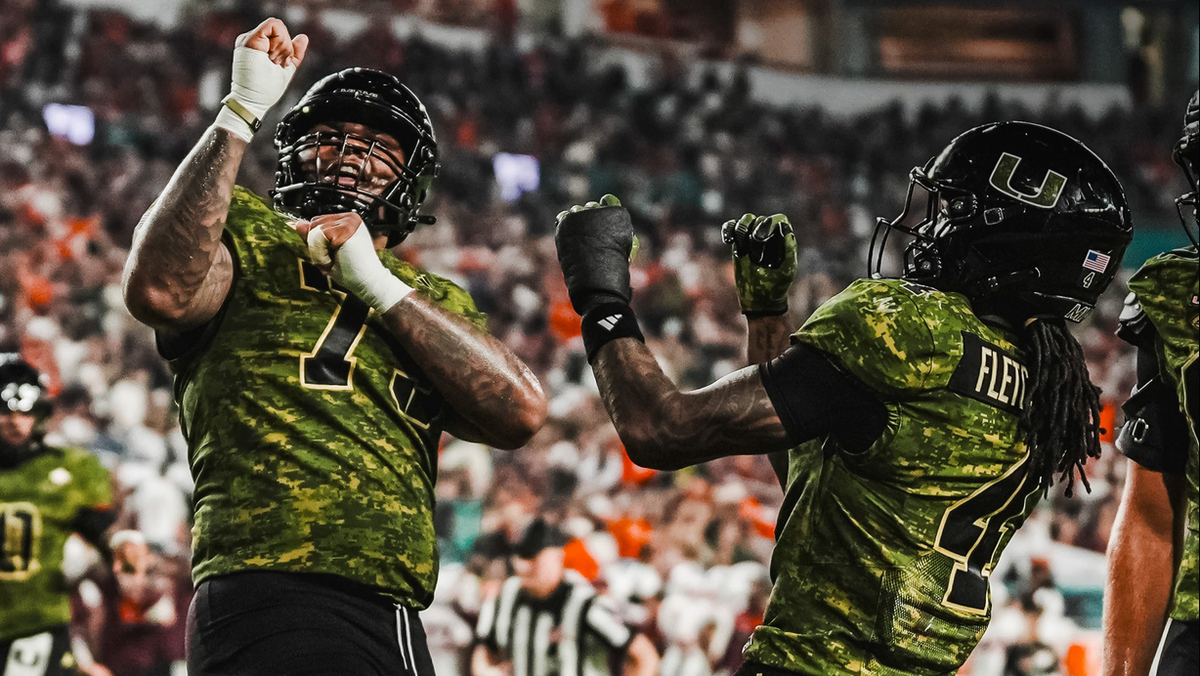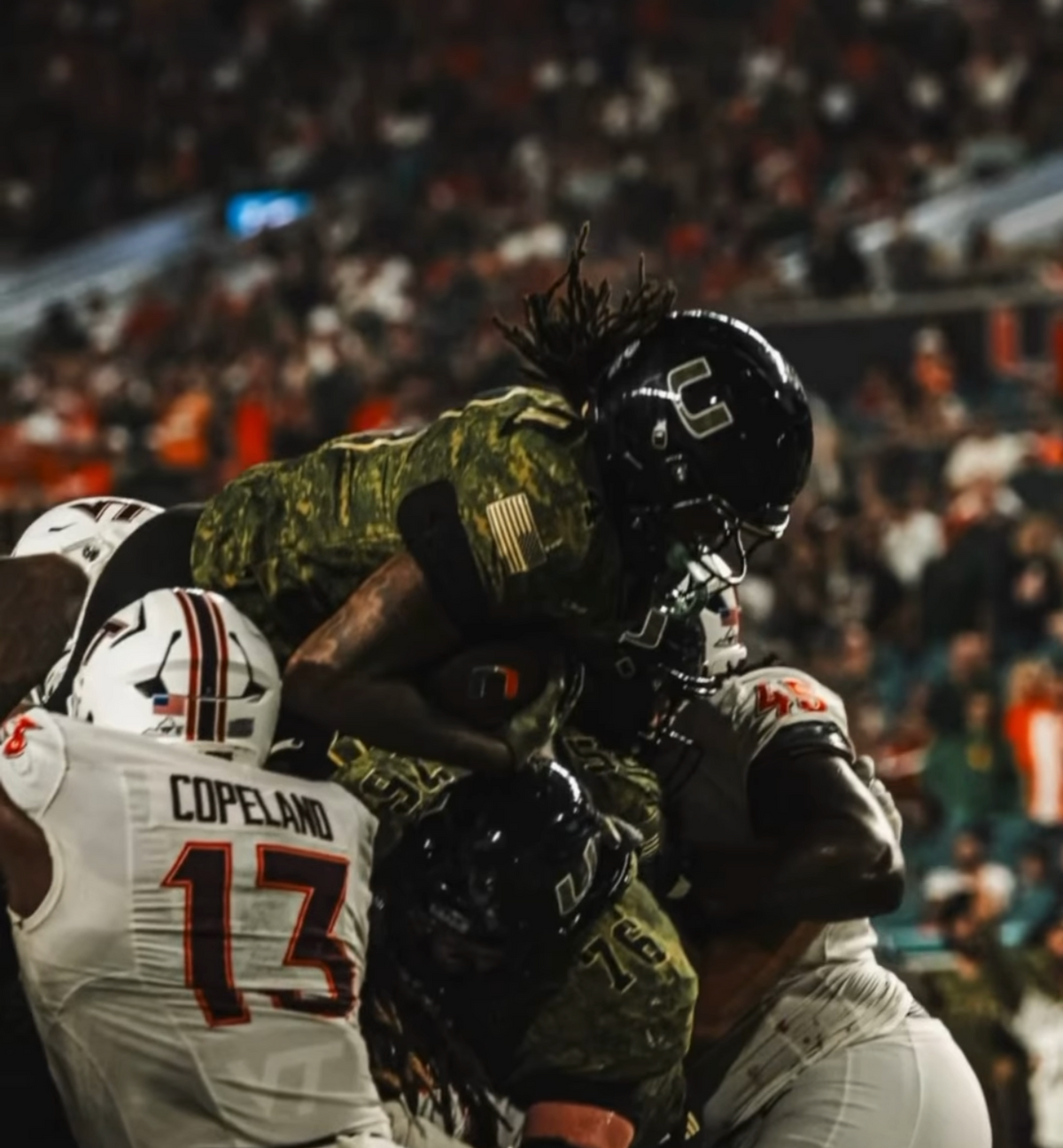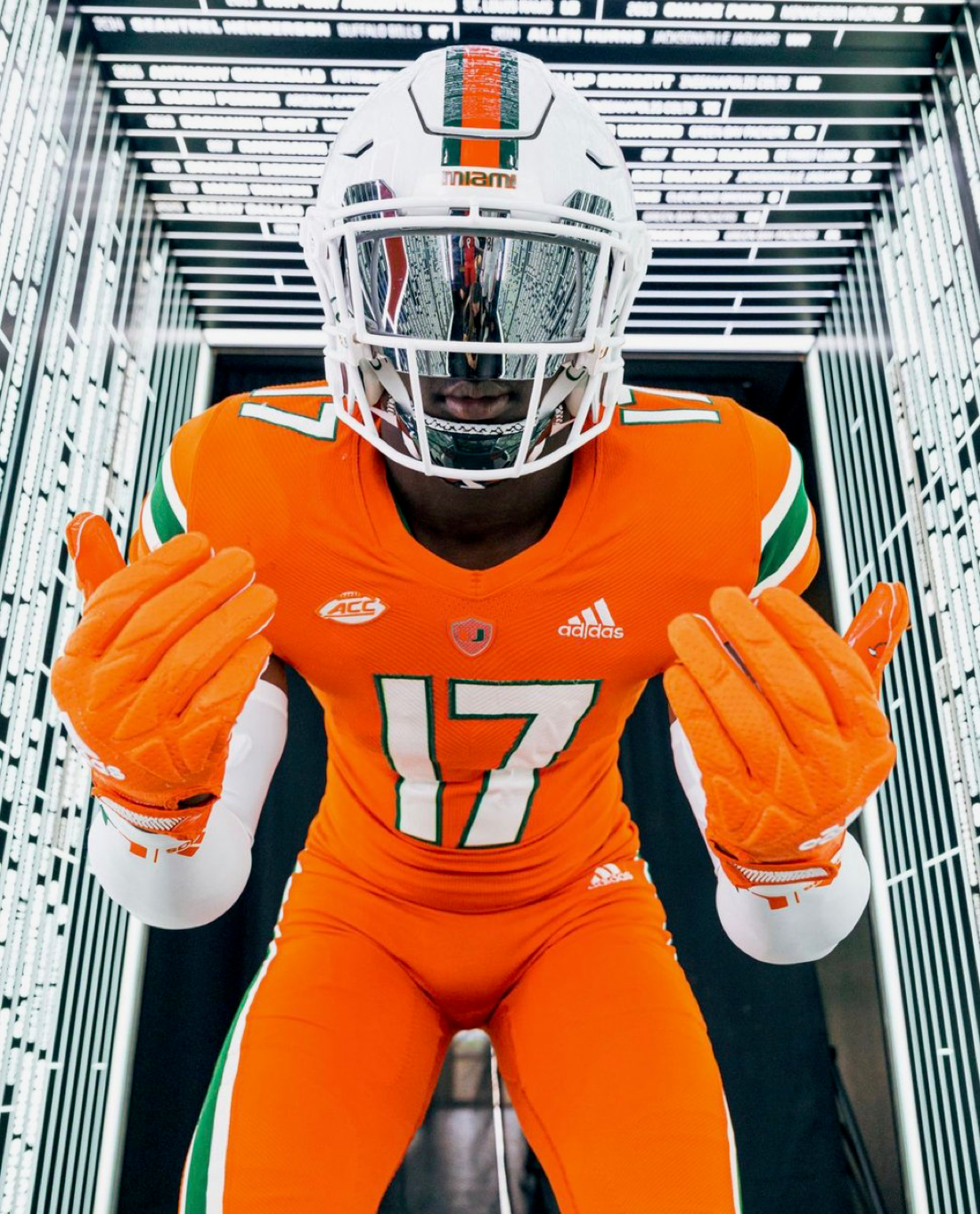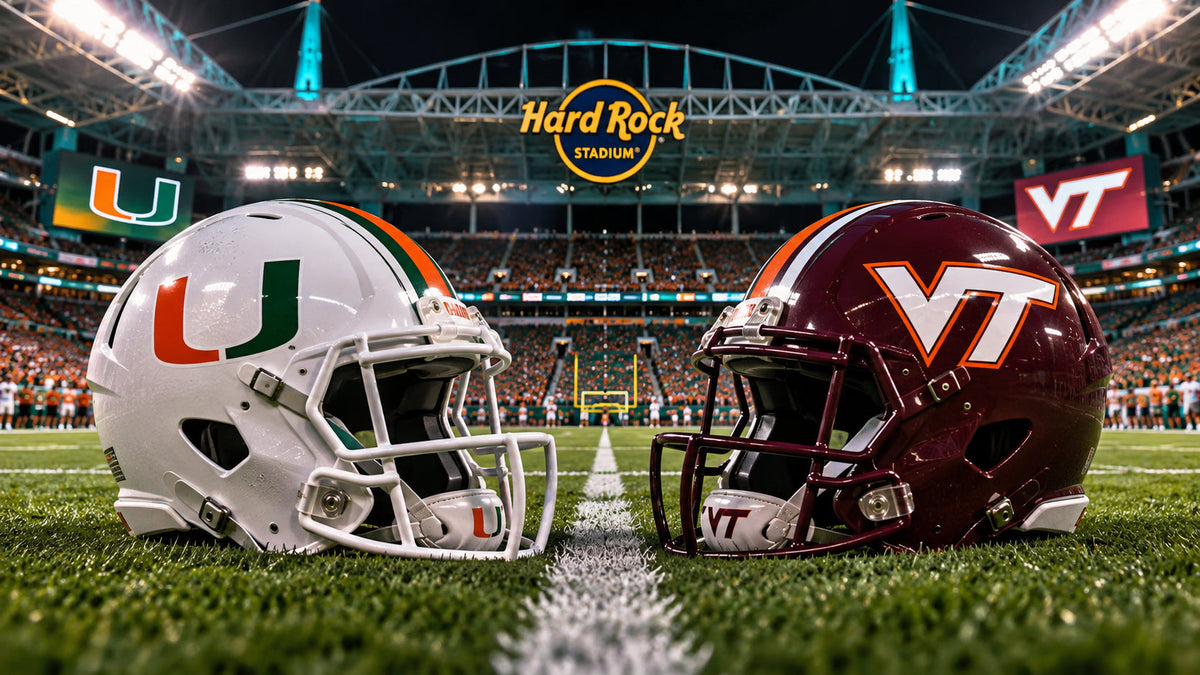
The No. 7 Miami Hurricanes (9-1) return to Hard Rock Stadium Saturday night with an opportunity to clinch a berth in the ACC Championship Game. Virginia Tech (6-4) arrives having surrendered 91 points in consecutive losses to SMU and Stanford, a troubling trend against Miami's nation-leading scoring offense. The Hurricanes average 44.1 points per game, but the bigger question is how Shannon Dawson continues adjusting without injured receiver Malachi Toney.
Darian Mensah has thrown for more than 3,000 yards and 29 touchdowns while completing 76.3% of his passes. Toney's absence isn't fixed by simply throwing more balls to Cooper Barkate and Elija Lofton. Dawson must find ways to recreate the explosive opportunities Toney provided without sacrificing Miami's offensive efficiency. So what does Miami need to do to win this game and improve to 10-1?
Miami's Keys to Victory
Protect the Football and Keep Mensah Clean
Mensah has thrown just two interceptions in 317 attempts, demonstrating exceptional decision-making in Miami's aggressive passing offense. Virginia Tech has recorded only three interceptions this season, while its secondary allows 229.7 passing yards per game. Mensah should find opportunities underneath without forcing contested throws downfield.
Virginia Tech defensive end Aycen Stevens presents a bigger challenge, entering Saturday with 8.5 sacks, 11 tackles for loss, and three forced fumbles. Miami has surrendered only 12 sacks through 10 games, but Stevens can disrupt individual possessions. Dawson should mix quick throws, running-back chips, and screens to discourage Stevens from attacking Mensah without hesitation.
Minimize Penalties
Miami has committed 66 penalties for 567 yards through 10 games, averaging 6.6 penalties and 56.7 yards per contest. The Hurricanes convert 52.6% of their third downs, ranking fifth nationally. An offense that moves the chains that efficiently has no business repeatedly creating long-yardage situations through false starts and holding penalties.
A first-down penalty can eliminate Miami's rushing advantage and allow Stevens to attack without worrying about play-action. Against stronger opponents in December, those mistakes could determine whether possessions end in touchdowns or punts. Miami needs cleaner execution, particularly when operating near the red zone.
Establish the Run Against Virginia Tech's Defensive Front
Virginia Tech surrendered 219 rushing yards against SMU and 233 against Stanford, exposing defensive weaknesses Miami should immediately test. The Hurricanes average 187.1 rushing yards per game, with Javian Mallory and Mark Fletcher Jr. combining for 1,117 yards and 19 touchdowns. Inside-zone runs, counters, and outside concepts could challenge a Hokies defense that has struggled to maintain its assignments.
Virginia Tech's problem becomes more complicated if Miami consistently gains four or five yards on first down. Bringing an additional safety forward might help contain Mallory and Fletcher, but it also reduces coverage assistance against Miami's receivers. Dawson can exploit that adjustment through play-action and intermediate routes behind linebackers stepping toward the run.
Miami's X-Factors
Vandrevius Jacobs
Jacobs has caught 16 passes for 233 yards and one touchdown, averaging 14.6 yards per reception. Seven catches have gained at least 15 yards, including a 44-yard reception, suggesting he can stretch defenses when given opportunities. However, 16 receptions remain a limited sample, and Miami cannot assume he will reproduce Toney's production simply because he possesses impressive speed.
Jacobs' greatest value may be how defensive backs respond to his vertical threat. Dawson can use motion and stacked alignments to create cleaner releases, allowing Barkate and Lofton to attack underneath coverage. The question is whether Jacobs can consistently separate when Virginia Tech challenges him with physical coverage.
Javian Mallory
Mallory has rushed for 580 yards and nine touchdowns on 84 carries, averaging 6.9 yards per attempt. Fletcher has accumulated 537 yards on 115 carries, giving Mallory 43 more yards on 31 fewer opportunities. The freshman's efficiency makes him particularly dangerous against Virginia Tech's recently exposed rushing defense.
Mallory shows patience behind his blockers, allowing lanes to develop before accelerating through openings. His receiving ability adds another dimension, demonstrated by his 63-yard catch-and-run against Duke. With Fletcher having missed the second half of that game because of an injury, Mallory's role could become even more important, although Fletcher is expected to be available Saturday.
Virginia Tech Players to Watch
Luke Reynolds
Reynolds has recorded 57 receptions for 585 yards and six touchdowns, making him one of the ACC's most productive tight ends. The Penn State transfer presents a difficult matchup for Miami's linebackers and safeties, particularly in the intermediate passing game. Miami allows 254.5 passing yards per contest despite possessing the nation's stingiest rushing defense.
North Carolina tight end Jelani Thurman previously punished Miami for 70 yards and two touchdowns, offering Virginia Tech a potential blueprint. The Hokies could use play-action to influence Miami's linebackers before targeting Reynolds on crossing routes or throws behind the second level. Corey Hetherman must vary coverage responsibilities rather than repeatedly leaving Reynolds against favorable matchups.
Jeffrey Overton Jr.
Overton has rushed for 869 yards and seven touchdowns while adding 251 receiving yards, giving him 1,120 yards from scrimmage. His versatility could help Virginia Tech avoid predictable passing situations against Miami's defensive front. Quarterback Ethan Grunkemeyer needs productive early-down runs to prevent the Hurricanes from attacking obvious passing situations.
Miami allows only 70.9 rushing yards per game, making Overton's assignment particularly difficult. If the Hurricanes contain him on early downs, his receiving ability on screens and checkdowns could become Virginia Tech's best alternative. Keeping Overton involved will be essential if the Hokies hope to sustain drives.
Prediction
Virginia Tech faces an uncomfortable choice: commit additional defenders to stopping Mallory and Fletcher or protect against Miami's passing attack and risk getting overwhelmed on the ground. I expect Dawson to exploit that dilemma, with Miami establishing control early while Reynolds finds some success against the Hurricanes' secondary. The Hokies haven't demonstrated the defensive consistency necessary to contain an offense this productive.
I'll be watching whether Dawson can still manufacture 15- and 20-yard completions when opponents challenge Miami to operate without Toney. The Hurricanes have enough talent to dominate Virginia Tech, but December will demand an offense that can generate big plays without depending on one extraordinary receiver. Saturday's result should be convincing; how Miami creates those explosive opportunities will tell us considerably more. But I expect Miami to win comfortably and pull away in the second half.
Miami 44 Virginia Tech 17