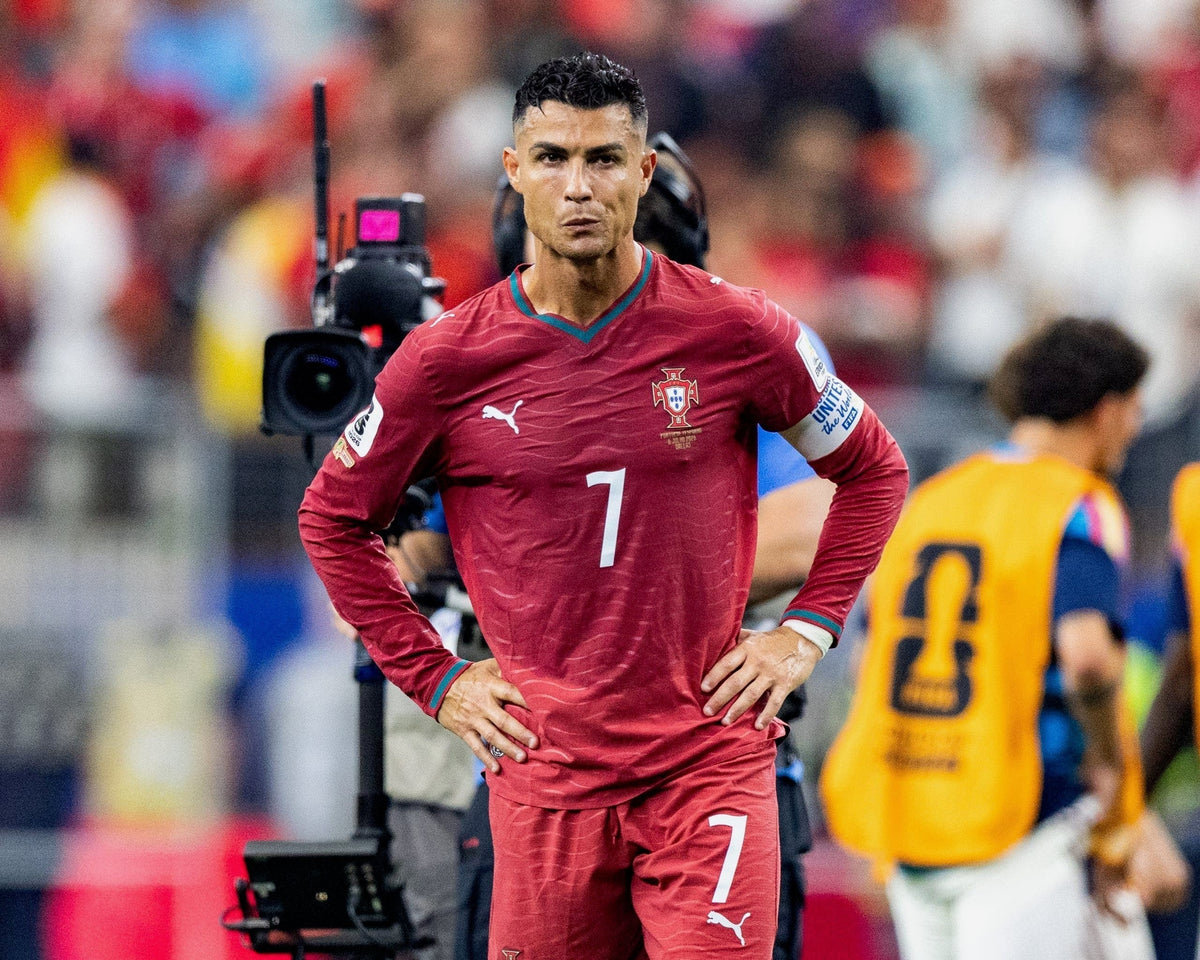
The biggest story in football this week is Cristiano Ronaldo walking out on Portugal midway through the international window. The 41-year-old, a 234-cap national-team legend and the country’s all-time leading scorer with 146 goals, was left on the bench for the entire 2-1 win over Norway on Sunday, 27 September, only the second time in his Portugal career he has been an unused substitute in a competitive match, after a dead rubber at Euro 2008. The snub sparked a crisis meeting with the coaching staff, the row has thrown his international future into open doubt. Portugal meanwhile went on to defeat Denmark 4-2 without Ronaldo in a game where Gonçalo Ramos who replaced Ronaldo finished with a goal and an assist and an 8.3 rating for the match.
Cristano Ronaldo has no one to blame for himself. It is Ronaldo’s ego which is destroying him and his teams chances. When he is on the pitch it’s as if Portugal is playing with 10 men on the pitch. Ronaldo has not been a starter-worthy player since 2022. After the group stage of that World Cup, Sofascore put him in its worst team of the phase with an average rating of 6.37: he had started all three of Portugal’s games, scored once from the penalty spot against Ghana, and was substituted in each match. When the tournament ended, Sofascore named him in its worst XI of the full competition with a rating of 6.46. He scored only that one penalty, was dropped to the bench for the knockout games, and Portugal went out in the quarter-finals to Morocco.The pattern continued at Euro 2024 and the 2026 World Cup. Marca named him in its most disappointing XI of the Euros, the only Portugal player in the side, and FourFourTwo and FootballTransfers also included him after he played five matches, scored none from 23 shots, missed an extra-time penalty against Slovenia, and saw Portugal lose on penalties to France in the quarter-finals. WhoScored ranked him the worst finisher relative to expected goals at the tournament, at about −3.5 xG. At the 2026 World Cup his numbers were better — five matches, three goals, a Sofascore average of 7.02, but Bleacher Report, Gazzetta dello Sport and an early Pulse Sports Nigeria round-one XI still listed him among the most disappointing players as Portugal again exited in the round of 16, this time to Spain.
Meanwhile Messi in 2022, at 35, Messi carried Argentina to the title, scored seven goals including in the final, and won the Golden Ball, while Ronaldo managed one penalty, was benched in the knockouts, and landed in Sofascore’sworst XI. In 2026, at 39, Messi produced an even more historic campaign: a hat-trick against Algeria that made him the oldest player to score three in a World Cup match, the all-time men’s scoring record, eight goals and four assists across eight games, and a run to the final, which Argentina lost 1-0 to Spain. He finished second in the Golden Ball voting behind Rodri and topped Transfermarkt’s player-of-the-tournament poll.
Before the blow up, Cristiano Ronaldo had said he would accept whatever role Portugal asked of him in the Nations League. After the win over Wales he told RTP, “I’ve always said that the group is above any individual player and I am fully available to fulfil whatever role is assigned to me,” and added, “If the coach decides the best thing for the team is for me to start on the bench, I’ll accept that perfectly. I’m here to help the national team in whatever way is needed. If I don’t get to play, that’s no problem either; the most important thing is for the team to win and for the group to be united.” A few days earlier he had told reporters, “I’m completely ready to play. If the coach wants me to start the match on the bench, I’m ready for that too.”
Against Wales on 24 September, Ronaldo started and was poor. Portugal won 1-0, but he took a match-high seven shots, missed a clear chance from a Rúben Neves cross, had a goal ruled out for offside, and finished with an expected-goals figure higher than Wales’ entire team without scoring. Jorge Jesus took him off after 67 minutes.Three days later, in Oslo, Jesus left him on the bench for the whole 2-1 win over Norway. Ronaldo warmed up along the touchline ,Jesus later said he had told him he would come on for the last half-hour, then changed his mind because Gonçalo Ramos was playing well and did not get on.
At the final whistle he walked straight down the tunnel instead of joining his teammates with the travelling supporters. He then missed normal training in the days that followed. On Wednesday 30 September in Copenhagen, Jesus told reporters Ronaldo would not start against Denmark either. After that press conference, and a conversation with Portuguese Football Federation president Pedro Proença, Ronaldo left the training camp. Reports said his private jet was sent for him. On Instagram he wrote that he had decided to leave, and that “in due course” he would tell the Portuguese people the truth about his reasons, while wishing the squad luck. Portugal carried on without him.This was under Jorge Jesus, the coach Ronaldo had worked with at Al-Nassr. The reaction from Ronaldo, and from a section of his supporters, was the usual: treat the walkout as justified, and shift the blame onto the coach, the teammates and the Portuguese public rather than the missed chances, the early substitution and the refusal to stay when he was not picked. Cirstiano Ronaldo is always the victim always wronged and never once takes responsibility for his behavior and selfishness.
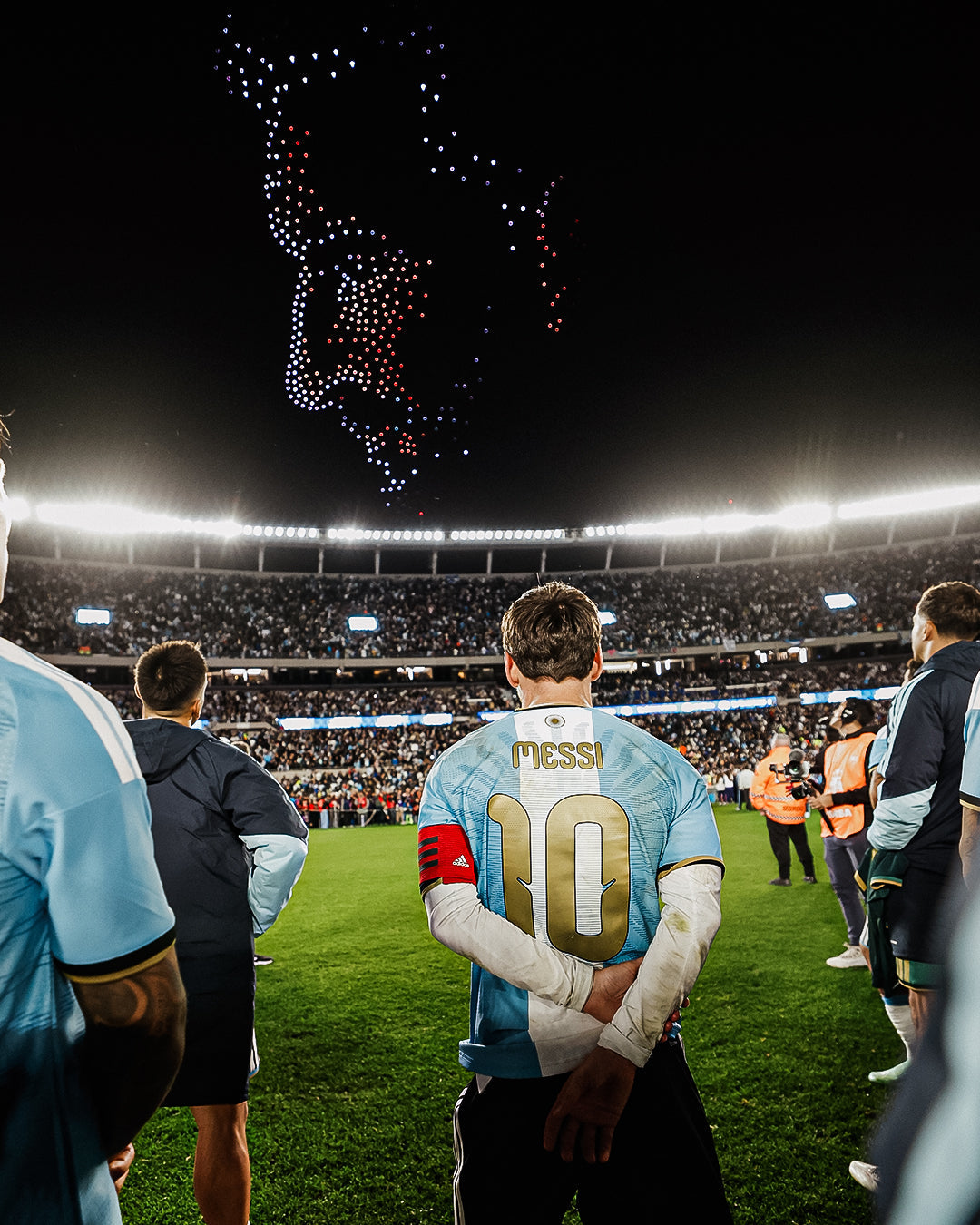
It is sad that a top-five player in the history of the sport, and the most legendary figure in Portugal’s history, is going out this way. The contrast with Messi could not be more stark. Messi finished football and retired from the international team not chasing ghosts or records, but on his own terms, while he still played like Lionel Messi. He lifted his teammates and never talked about himself or promoted himself as the “GOAT.” In fact, if you ask him, no one will ever surpass Maradona. He is now days away from a packed celebration in Buenos Aires, where his Argentine fans, friends, former coaches, rivals and teammates will give him the tribute of a lifetime. These things are earned through leadership and love, not through self-promotion. Ronaldo’s last six to eight years with the national team have been about himself. He publicly said he would do whatever the coach wanted, and the second he was benched he threw a tantrum, left, and blamed everyone but himself. That is why 6 October will be such a jarring sight. On one side, Lionel Messi finishes his career having won every major trophy for his country — a World Cup, two Copa Américas and a Finalissima, retiring on his terms, bringing back Argentina’s glory and going out in a blaze of glory as the greatest player in the history of the sport. On the other, Ronaldo is sitting in his mansion somewhere, watching Messi receive the love he so desperately craves, while his own team wins without him. He is going out alone, ending his career as a washed, delusional narcissist who put himself above his team.